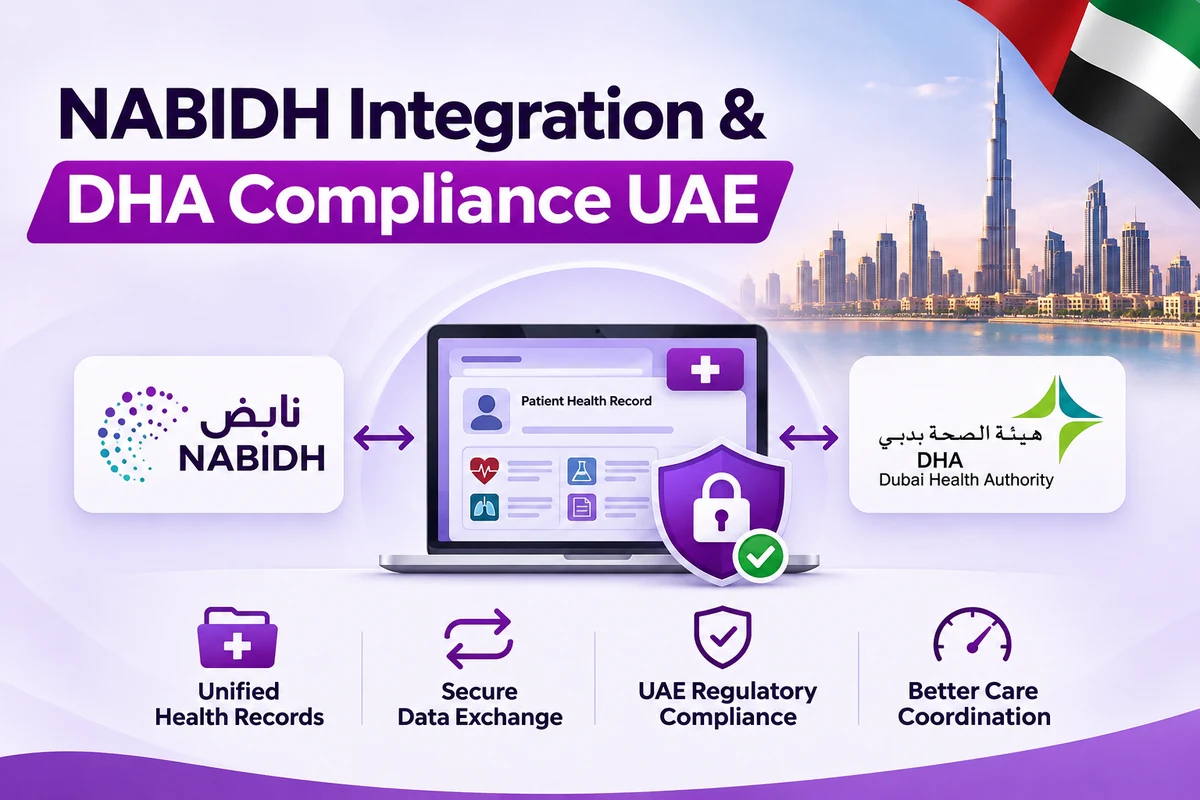
NABIDH-Ready EMR & HIS Integration for UAE Healthcare Providers
Prepare your healthcare facility for UAE health information exchange requirements with HealthCluster’s integrated EMR and Hospital Information System. Organise clinical workflows, patient records and interoperability requirements through one connected healthcare platform.
Is Your EMR Ready for UAE Healthcare Data Exchange Requirements?
Healthcare providers need more than digital patient records. Their systems must support applicable interoperability, data quality and information exchange requirements.
Disconnected Patient Records
Patient information may remain spread across different systems, making connected clinical workflows difficult.
Integration Difficulties
Existing software may not support the required data structures or exchange specifications.
Inconsistent Clinical Data
Incomplete records and inconsistent terminology can affect information quality.
Manual Administrative Work
Teams may spend additional time preparing and reviewing information for exchange.
Unclear Onboarding
Facilities need clarity about technical responsibilities, validation and onboarding steps.
Changing Requirements
Healthcare systems should be reviewed against current applicable standards and specifications.
Understand NABIDH, DHA and DOH Requirements
Different emirates operate within different healthcare authority and health information exchange environments. Your facility location and licence determine which requirements you need to assess.
One Integrated Healthcare Platform for UAE Clinical Operations
HealthCluster brings clinical, administrative and operational workflows together. Healthcare organisations can manage patient information and coordinate their integration requirements through a connected healthcare platform.
- Integrated patient demographics and medical history.
- Structured clinical documentation and encounters.
- Diagnosis, prescription and clinical order workflows.
- Laboratory and radiology workflows.
- OPD, IPD, nursing and pharmacy operations.
- Integration assessment and technical planning.
Organise patient demographics, encounters, history and clinical information.
Manage assessments, diagnoses, prescriptions and clinical results.
Assess integration specifications, data structures and technical dependencies.
Coordinate administrative, clinical and operational processes.
Review permissions, information handling and audit requirements.
What Should Your EMR Support for NABIDH Integration?
Assess the following technical and operational areas before selecting or integrating an EMR with the applicable UAE health information exchange platform.
| Requirement Area | What to Evaluate | Business Importance |
|---|---|---|
| Facility Onboarding | Facility registration and eligibility | Establishes the applicable onboarding route |
| EMR Interoperability | Required exchange specifications | Supports system connectivity |
| Clinical Data | Structured patient and clinical information | Improves data consistency |
| Patient Identity | Accurate demographic information | Supports reliable patient identification |
| Clinical Documents | Applicable document structures | Supports information exchange |
| Security and Access | Authentication and permissions | Supports information protection |
| Testing and Validation | Technical testing and message validation | Identifies integration issues |
| Go-Live Readiness | Facility and vendor coordination | Supports implementation planning |
From EMR Assessment to Integration Readiness
A structured implementation approach helps your facility identify technical gaps and prepare for the applicable onboarding process.
Facility Assessment
Review your facility type, location, licence, existing EMR and applicable exchange requirements.
Technical Gap Analysis
Evaluate data structures, interoperability capabilities, security and integration dependencies.
Integration Planning
Define technical scope, responsibilities, architecture and implementation milestones.
Configuration & Testing
Configure agreed workflows and conduct applicable technical validation and testing.
Onboarding Coordination
Coordinate with the facility and relevant exchange stakeholders during onboarding.
Go-Live Support
Coordinate deployment and monitor the agreed integration workflows.
EMR Integration for Different Healthcare Facility Types
Review integration and interoperability requirements according to your facility’s clinical and operational environment.
Hospitals
Inpatient, outpatient, nursing, pharmacy, laboratory and radiology workflows.
Medical Centres
Patient registration, consultations, diagnoses, prescriptions and follow-ups.
Dental Clinics
Dental records, odontograms, treatment plans and imaging workflows.
Diagnostic Facilities
Laboratory orders, specimen tracking, results and reporting workflows.
NABIDH, DHA and DOH Integration FAQs
Understand the important considerations before choosing a healthcare information system for your UAE facility.
NABIDH integration connects a healthcare facility’s EMR or HIS with Dubai’s Health Information Exchange platform. It supports the exchange of relevant patient health information according to applicable requirements.
The term is commonly used by healthcare providers searching for an EMR that can support NABIDH integration and applicable requirements. Buyers should confirm actual integration status, technical capabilities, validation evidence and facility onboarding requirements.
DHA has issued requirements concerning the onboarding of applicable healthcare facilities to NABIDH. Facilities should review current requirements applicable to their licence and facility category.
NABIDH is Dubai’s Health Information Exchange platform, while Malaffi is Abu Dhabi’s Health Information Exchange platform. They operate within their respective emirate healthcare environments and have different facility onboarding requirements.
An EMR should be evaluated against applicable DHA policies and NABIDH interoperability standards. Areas include structured clinical information, patient identification, data quality, information security and integration validation.
The applicable requirements depend on the facility type and current DOH standards. Facilities should review Malaffi connection requirements, technical connectivity and applicable minimum datasets.
Potentially, yes. The existing EMR must be assessed for interoperability capabilities, supported data formats, technical architecture and applicable NABIDH specifications. The final approach depends on the system and facility requirements.
There is no single timeline for every facility. Duration depends on facility readiness, EMR capabilities, data quality, technical validation and the relevant onboarding process.
Request a product demonstration and share your facility location, licence type, existing EMR and integration requirements. The team can discuss the relevant assessment and implementation scope.
Looking for a NABIDH-Ready EMR or DHA / DOH Integration Solution?
Discuss your facility’s integration requirements with HealthCluster. Explore our EMR and HIS workflows and identify the right next steps for your healthcare organisation.
Book Your Integration Demo →Authority approval, facility onboarding and technical acceptance are subject to the applicable authority and exchange operator.
Leave a Reply