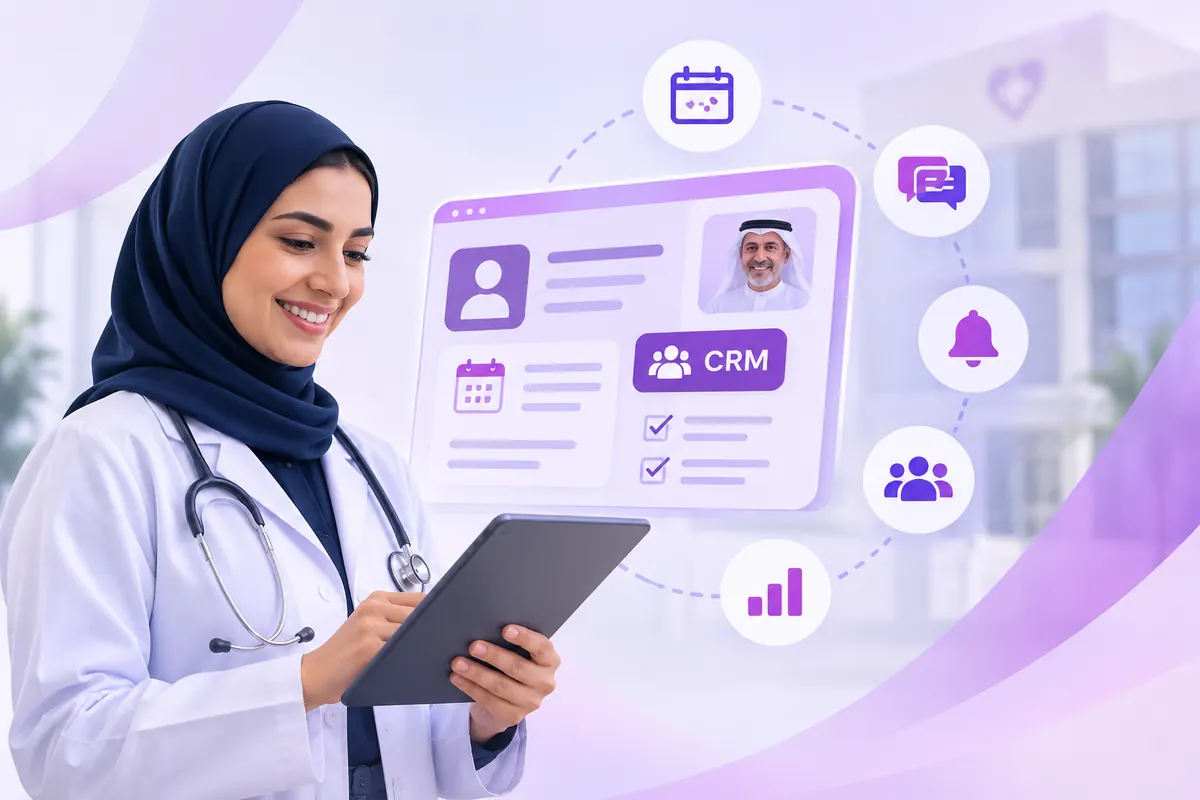
Healthcare CRM Software for Connected Patient Relationships
Manage patient engagement, enquiries, follow-ups and communication workflows through a structured healthcare CRM approach. Explore how healthcare CRM can work alongside EMR, clinic management and oncology applications to support connected patient relationships.
Healthcare CRM software helps hospitals, clinics and specialty practices manage patient enquiries, communication, engagement, appointment follow-ups and relationship workflows. When connected with an EMR or clinic management system, it can help teams coordinate patient-facing activities with relevant healthcare information.
Manage Patient Relationships Beyond Basic Contact Management
Healthcare organisations communicate with patients at many stages: from an initial enquiry and appointment request to follow-up, ongoing treatment coordination and future visits.
When communication records are spread across spreadsheets, disconnected applications and individual team inboxes, it can become difficult to maintain a consistent view of patient interactions.
A healthcare CRM approach brings these relationship activities into a structured process. It can help administrative and patient-facing teams organise enquiries, track communication history and coordinate follow-up responsibilities.
- Organise patient enquiries and contact records.
- Coordinate appointment-related follow-ups.
- Maintain communication history.
- Support specialty-specific engagement workflows.
- Review enquiry and relationship activity.
- Assess integration with EMR and clinic systems.
Organise incoming enquiries and maintain relevant contact information.
Maintain a structured record of patient-related interactions.
Organise follow-up responsibilities and communication activities.
Coordinate enquiry-to-appointment communication workflows.
Review relevant enquiry, communication and engagement information.
What Should a Healthcare CRM System Include?
Evaluate CRM capabilities according to your patient engagement model, facility structure, communication requirements and existing healthcare applications.
Patient Enquiry Management
Organise enquiries from website forms, telephone calls, referrals and other approved communication channels.
Patient Profile and History
Maintain relevant relationship records and review available patient information through appropriate system access.
Communication Management
Coordinate communication activities and maintain interaction records according to organisational policies.
Appointment Follow-ups
Organise appointment enquiries, follow-up responsibilities and patient communication workflows.
Referral Coordination
Review referral enquiries, contact details and communication activities across relevant healthcare teams.
CRM Reporting and Insights
Evaluate enquiry sources, follow-up activity, communication records and relationship management performance.
Connect Healthcare CRM with EMR and Clinic Management Software
CRM and EMR systems serve different purposes. CRM focuses on patient relationships, enquiries and communication. EMR manages clinical records and patient care documentation.
When these systems are appropriately connected, healthcare teams can evaluate how patient-facing activities relate to appointment and clinical workflows without treating CRM as a replacement for the medical record.
- Review CRM and EMR integration requirements.
- Coordinate enquiry and appointment workflows.
- Reduce unnecessary duplicate contact records.
- Define access permissions for different teams.
- Maintain appropriate separation of CRM and clinical data.
Patient enquiries, communication and relationship workflows.
Appointments, facility operations and administrative coordination.
Clinical documentation, patient history and care information.
Patient billing, financial workflows and revenue processes.
Healthcare CRM Software for Oncology and Hematology Practices
Oncology and hematology practices coordinate complex patient journeys that may involve consultations, diagnostic investigations, treatment planning, recurring appointments and ongoing communication.
A specialty-focused healthcare CRM approach can help administrative and patient engagement teams organise enquiries, appointment coordination and follow-up communication across these stages.
CRM should complement clinical systems. Treatment decisions, diagnoses, prescriptions and clinical documentation must remain within appropriately governed clinical workflows.
- Manage oncology and hematology patient enquiries.
- Coordinate consultation and appointment communication.
- Organise follow-up responsibilities.
- Maintain relevant patient interaction records.
- Coordinate administrative communication across departments.
- Evaluate connection with oncology EMR workflows.
Organise enquiries and referral-related communication.
Coordinate appointment-related administrative activities.
Organise communication and follow-up responsibilities.
Assess the appropriate relationship between CRM and oncology EMR.
How to Choose the Right Healthcare CRM Software
Before purchasing a healthcare CRM system, compare its functionality, integration options, security approach, implementation scope and suitability for your organisation.
Healthcare-Specific Workflows
Check whether the CRM supports patient enquiries, appointment communication, referral coordination and healthcare teams.
EMR and HIS Integration
Review supported interfaces, data synchronisation requirements and integration responsibilities.
Patient Data Protection
Evaluate user permissions, auditability, data handling and applicable privacy obligations.
Specialty Requirements
Assess whether the solution fits your clinic, oncology, hematology or other specialty workflows.
Implementation and Training
Understand configuration, data migration, staff training, deployment and ongoing support.
Reporting and Scalability
Review reporting requirements, multi-facility needs and future expansion plans.
Understand the Difference Before Selecting Healthcare Software
CRM, EMR and clinic management software support different responsibilities. A healthcare organisation should select the system based on its operational requirements.
| Area | Healthcare CRM | EMR | Clinic Management |
|---|---|---|---|
| Patient Enquiries | Relationship management | Patient record context | Registration workflow |
| Communication | Interaction tracking | Clinical communication records | Administrative coordination |
| Appointments | Appointment engagement | Clinical encounter context | Scheduling and calendars |
| Clinical Records | Not a clinical record replacement | Clinical documentation | May connect to EMR |
| Billing | Related enquiry context | Clinical service context | Administrative billing workflows |
| Primary Purpose | Patient relationships | Clinical information | Clinic operations |
A Practical Approach to Healthcare CRM Implementation
A successful CRM implementation starts with understanding how your healthcare organisation manages patient enquiries, communication and follow-up activities.
Requirements Assessment
Identify your facility type, departments, users and CRM objectives.
Workflow Mapping
Review patient enquiries, communication and appointment processes.
Configuration Planning
Define relevant CRM fields, roles, permissions and workflows.
Integration Assessment
Review EMR, clinic management and other application requirements.
Testing and Validation
Validate user access, data handling and expected workflows.
Training and Deployment
Prepare users and coordinate the agreed deployment activities.
Performance Review
Review engagement processes, reporting and operational feedback.
Continuous Improvement
Identify opportunities to improve workflows and system usage.
Healthcare CRM Solutions for Organisations Across the UAE
Hospitals, clinics and specialty practices should assess CRM workflows according to their facility structure, patient engagement model and operational requirements.
Dubai
Evaluate healthcare CRM, clinic engagement and EMR integration requirements for Dubai healthcare providers.
Abu Dhabi
Assess patient relationship workflows, specialty care coordination and healthcare application connectivity.
Sharjah
Review CRM and clinic management requirements for healthcare facilities and medical centres.
Across the UAE
Evaluate healthcare CRM implementation requirements for clinics, hospitals and specialty practices.
Connect Patient Relationship Management with Healthcare Operations
Explore related HealthCluster healthcare applications for clinic management, oncology workflows and electronic medical records.
Healthcare CRM Software FAQs
Common questions from healthcare organisations evaluating CRM software, EMR integration and specialty workflows.
Healthcare CRM software helps hospitals, clinics and specialty practices manage patient enquiries, communication, engagement and follow-up workflows. It supports patient relationship management and can complement EMR and clinic management systems.
CRM focuses on patient relationships, enquiries and communication. EMR manages clinical documentation, patient history and medical information. Both systems serve different purposes and may be connected where supported.
Common healthcare CRM capabilities include patient enquiry management, communication history, appointment follow-ups, referral coordination, user permissions and reporting. Requirements vary by healthcare organisation.
A healthcare CRM approach can support oncology and hematology practices with patient enquiries, consultation coordination, administrative communication and follow-up workflows. Clinical decisions and treatment records should remain within appropriately governed clinical systems.
Integration may be possible through supported interfaces or APIs. The required connection depends on the systems, data fields, workflows and technical scope agreed by the organisation and software provider.
Explore Clinic Management Software →Healthcare CRM implementation involves assessing requirements, mapping workflows, configuring the solution, reviewing integrations, testing, training users and coordinating deployment.
CRM can support patient communication related to billing enquiries and administrative follow-ups. Actual invoicing, payments, claims and financial transactions should be managed through the relevant billing or revenue cycle system.
Explore Revenue Cycle Management →Providers should evaluate patient data protection, access permissions, audit requirements, integration capabilities, hosting arrangements and applicable UAE healthcare regulations. Requirements depend on the facility and the information being handled.
Healthcare CRM pricing depends on users, modules, facilities, integration requirements, deployment model and implementation scope. Request a quotation based on your organisation’s needs.
Contact HealthCluster and share your facility type, location, current systems, specialty requirements and CRM objectives. The team can discuss the relevant product capabilities and demonstration scope.
Contact HealthCluster →Ready to Improve Patient Engagement Across Your Healthcare Organisation?
Explore how healthcare CRM workflows can complement your EMR, clinic management and specialty applications. Discuss your requirements with HealthCluster.
Request a Healthcare CRM Demo →Product features, integration availability and implementation scope are subject to technical and commercial assessment.